Showing posts with label Wounds. Show all posts

Friday, October 25, 2013

R&D Update: Hit Dice and Hit Points Part 2

"He who values his life dies a dog's death"

One of the driving reasons behind altering HP is the attitude I often see in players who have achieved a certain level.  Were I to tell them for their heinous crimes that the guard has been dispatched to arrest them the response I would ordinarily get is "So what?"  Rightfully so, a 5th level fighter is rather adept at dispatching some common guards who on all accounts should be no more than 2nd level.  Throwing more guards at him won't exactly solve the problem if his AC is sufficiently good.  I'm a big proponent against level inflation so I have zero desire to start ratcheting up the levels of guardsman.  While I'm not a big fan of the Eberron setting I did highly appreciate the idea that the only high level characters left, besides a few monarchs were the PC's.  With no one else around it falls on the PC's the shake up the kingdom, dispatch some monsters and save the world.  For that reason I cannot in good conscious merely amp up the level of the town guard to be on par with the PC, it would be unfair to the heroic genre and the goals of fantasy gaming.  Incendiary opinions aside rather than hand-wave it away by saying the guards superior numbers take this vagrant down I would like for there to options in the mechanics to accomplish this.  Either by combat tactics (flanking/surrounded) or a change in the foundation of Hit Points.  Why not both?

Friday, January 13, 2012

Who needs excess bookeeping when you have players?

While I was running a game last night I had an interesting idea pop up, but first a little background.  I've spoken about Wounds before.  I've always liked the idea of having a specific pool that directly represents taking a serious injury.  I enjoy death spirals in certain games but not in D&D, so I adapted Wounds from the old StarWars RCR d20.  Wounds are a measure of how much lethal punishment you can take before dying.
I talked about problems with it in the past but I've managed to solve most of them (I should really do a follow-up post), and I use them in my current Labyrinth Lord game.

Here's how it works in my current game.  In addition to Hit Points all characters have a maximum number of wounds they can receive equal to their Constitution score plus their Level.  So at first level, and the way I do stat generation, any given character has 7 -19 Wounds at first level.  I stumbled upon a very elegant critical system during the course of gameplay so any given critical hit can do at best 1-6 Wounds.  I also have a simple bleed-out system where if you take a Wound from a slashing or piercing weapon you begin taking 1 Wound each round.  This brings me to a novel idea.

  • Since Wounds are a clear representation of how badly someone has been hurt there is no point in hiding that from the players.
  • When you have lots of different creatures in a fight it be a bit of a hassle ticking off 1 Wound each round.
  • Why not have the player that wounded the target in charge of the ticking time bomb.  
    • They will be more invested in their opponent, creating a fight to the death scenario
    • At any given time they have a good idea of how close to death their opponent is and how close they are to finishing the fight
    • Putting players in charge of this will prime them to be DM's should they ever give the try
  • If you get the player's to do the work for you you can sustain your lazy DM lifestyle.
With that in mind I'm going to give this a try in the next session.  I'll keep you appraised of how well it works out.

Thursday, October 27, 2011

Doomed to Repeat; Creative Urges

Been a while since I've posted an update.  Here's what I've been working on.

My players and I grew frustrated with Saint Sage Edition since we were coming from some fast and loose systems.  Moving back to the structured, "There's a DC for that.  There's always a DC for that" was a bit of a wake up call.  As much as I love Sage Edition I'm beginning to realize that I love it for being a great d20 system and thus a great D&D system.  Thematically I don't think Star Wars and 20 levels really coincides.  With that in mind we came up with a very agreeable solution.  All the players love SW Minis.  I personally love it for it's simplified approach of taking the "Keep It Sweet and Simple" design approach of Sage and further boiling it down.  Abilities are useful, rather than roadblocks on the way to power.  Many abilities are resolved with a simple saving throw.  A Saving throw is always 11!  Talk about ease of use, this is a terrific rule of thumb (later expansions would add in Save of 6 or 16 but all it's really doing is adding or subtracting +5).  That single rule  I love so much I decided to adapt Static Save DC's for my own games.

So I began the task of going through the glossary and rules of Star Wars Minis to create a playable RPG system.  I'll talk more about that in a follow up post.


I've also been working on transcribing my thoughts to my over-burgeoning text documents.  From there I've been taking barebones systems and trying to create a rough draft of my games.  I'm of the opinion that at some point you need to start writing things down in a coherent fashion or you'll never make progress.  Things have been slow going so far.  I'll never marginalize the work of a copy editor again.  There is nothing more agonizing than taking well worded paragraphs and putting them on the chopping block to make a coherant idea fit on a single column or page.

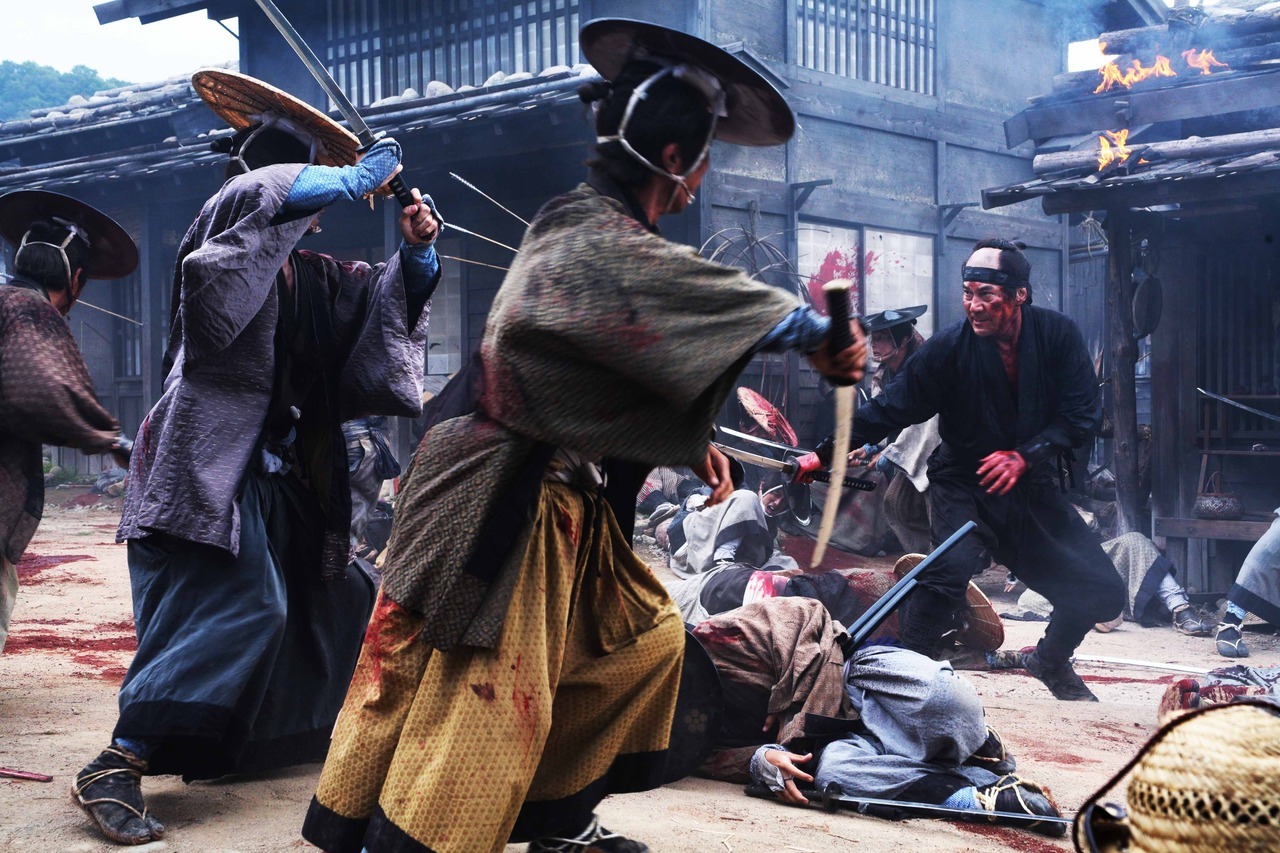
Currently, I'm working on getting the basic combat system down.  Here is where I ran into a bit of trouble and it pertains to anyone interested in design and modification of RPG systems.  I wrote many posts ago about Wounds, the lifeblood of your character.  As opposed to Hit Points these represent actually taking a serious hit, and if you're lucky you can keep on going.  I based the idea (well revised it really) from the Star Wars RCR d20 system where a critical hit could go directly to Wounds.  Thus recreating the Samurai-things can be settled in a sudden stroke- action present in Star Wars.

 The problems were many of course, they decided to keep critical multipliers in, and as you can imagine doubling 2d8 plus modifiers will nearly always trump your Constitution score.  In my original revision I merely had criticals go straight to Wounds with no doubling or tripling to speak of.  I reasoned that damage progressed at a rate equal to half your level while Wounds progressed at a rate equal to your level, therefore damage would not out pace Wounds.  Of course this idea has a few holes in it, namely that it is ignorant of damage modifications that come from feat choices or class features but the basic premise was a decent one.

The critical system has gone through some changes since then.  Mostly to rectify the idea that a certain ability score will affect the severity of critical hits.  Also having Armor apply only to damage to wounds as a way to minimize extra rolling.  As I was writing up an example in the Critical section I was blindsided by the conclusion.  A man wearing decent armor would still be flat out killed by a man with a longsword and a decent damage attribute.  I put it succinctly, "The defender would then receive a whopping 19 Wounds.  At which point he presumably dies."

Here's the lesson.  This goes out to everyone who likes to propose changed to their RPG system of choice.
"Rules do not exist in a vacuum.  Remember that even the smallest changes can have far reaching consequences on the overall balance of the system."

As someone who decided to design a core system from scratch after coming to the conclusion that tinkering with an existing system to make it work was more trouble than it was worth, I had hoped that lesson would have stuck with me.  Now then, it's time to look into solutions.
Wednesday, September 21, 2011

Playtesting Mark 1

With some excruciating work I've managed to finalize the level 1 abilities for 4 of the starting classes.  I've also managed to narrow down what stats I wanted to include and how I would use them and set values for them.  On top of that I had a rudimentary combat system and I was itching to test the new Stamina mechanic, Class features as well as the smoothness of combat.  So a playtesting we go.

In previous posts I've talked about Hit Points, Wounds, Armor and Defense.  Since then I've reevaluated and revised these to make them more elegant.  Since many people's gripe with armor as damage reduction is that it slows down the game and adds unnecessary rolling.  So my solution was to originally have armor affect only your Wounds ignoring HP altogether as hit points represent your ability to not be hit.  This meant that there would be an extra die roll but it would only come up at certain and important times.  Since armor had become slightly marginalized I decided to swap from differing dice sizes to different amounts of dice, adopting a 1d6/2d6/3d6 spread for light, medium and heavy armor respectively.

Of course things didn't stop there, I started thinking about people who had little in the ways of Defense (the first of three lines of defense before imminent death) who would prefer to wear heavy armor.  In this case their HP would quickly be chewed through before reaching Wounds at which point their armor would kick in.  To this I proposed two solutions.  The first was that you could voluntarily have faith in your armor and allow an attack to go straight to wounds bypassing HP entirely.  This set up a sort of gamble in that the character could probably guess which attack his armor could absorb entirely but of course some attacks may be more than meets the eye.  It's risky and I like it, and it's why I've decided to keep it.  The other solution..not so much.

The second proposal was that armor would provide a flat damage reduction for HP, a 1/2/3 spread for the light/med/heavy armor categories.  This eliminated the need for extra rolling and provided a benefit to people wearing heavy armor even if their defenses were extremely poor.  It sounds nice but in actual playtesting it's far from it.  For a player (and DM's armored NPCs) it's one more thing to remember for every time he takes damage.  Mathematically there is a snafu when damage exceeds HP and goes straight to wounds.  As an example if the player is wearing medium armor and has 4 hit points left and the DMs monster deals 7 damage to him there are a few mental gymnastics you need to do before you can resolve this.  First the 7 damage is reduced by 2, down to 5, this 5 is deducted from hit points leaving 1 damage remaining which carries over to wounds.  The wounds then have an armor rating of 2d6 nullifying the damage.  You can see how that can be confusing and the opposite of rapid combat.  You could create rules and caveats that could manuever around this problem but that would make much less elegant and one more aspect of combat the DM keep stored in his working memory.  So out the door it went.

Aside from that the rest of things went fairly smoothly.  The basic premise of the spell/shaping and mana system turned out fine but as for the actual execution it still needs some work and an eye for balancing it out at higher levels.  The importance of speed was not recognized until actual play and it gave me an elegant idea of what bonus to give people that are unarmored (+1 speed).  Stamina was interesting but partially forgettable due to it's overlap with speed and because the player was getting used to other abilities.  Class features and weapon qualities were all distinct and gave each character their own combat flair.  All in all it was a pretty good playtest and I'm psyched for the future.  Now if only editing and publishing tools weren't so irritatingly inefficient.

Sunday, March 6, 2011

Wounds

Let's talk Wounds.  My first experience with them was playing in the Star Wars RCR (Revised Corrected Revision or somesuch) where a player character had Vitality Points (Basically hit points that could also be used to power your Force Wizardry) and Wounds which equaled your constitution score.  Wounds represented how much actual damage you could take and not simply avoid.  For those situations where being hit was unavoidable.

This was pretty cool since people get maimed and chopped in half in Star Wars happened all the time.  It did have one tiny problem though.  You see a critical hit meant that you ignored Vitality and did damage straight to wounds.  Well that's not too terrible provided weapons did not do in excess of 10 damage per hit (they did, frequently).  Now your constitution was anywhere between 3 and 18 if you were a real man or  in the 8-18 range if you rely on point buy tomfoolery.  So when that 3d6 blaster pistol deals damage directly to your 3d6 generated constitution, well, things generally didn't end well.  In the first session of our first campaign the resident sniper critically hit Darth Maul and successfully atomized his head.  We decided to stop using wounds after that.

Still that was not the end of wounds.  In my homebrew game I've been fiddling around with ideas that allow people to navigate through the tumultuous tides of hit points to successfully sucker punch someone knocking them out or to allow an assassin to take out unsuspecting victims without relying on percentage based mechanics.  In my game all heroic character have wounds equal to two stats representing health and hardiness (Non-heroics including minions and mook generally have lower stats and no hit points making it likely for even the begging player character to one shot them without relying on 1HP monsters).   In most cases a character's wounds just acted as additional hit points improving survivability of starting characters without relying on the Triple hit dice SAGA uses.  However, wounds have a much more insidious purpose; whenever you critically hit a target on a surprise attack you deal damage directly to wounds. Replicating the mechanic but adding another requirement (surprise attack) changes this from random death blows to planned random death blows.  A small difference but still a difference.

This allows anyone with a great deal of luck to take out even an important or legendary figure.  Since there are a few ways to initiate a surprise attack outside of the surprise round the odds of these wounding attacks can be improved by careful allocation of character resources lending credence to certain archetypes (Assassin, Spy and Scoundrels spring to mind.)  There are also a few other ways to deal damage directly to wounds, poisons, coup-de-grace and mortal wounds (think uber crits) also fit the bill.

Sum it all up and it introduces a healthy dose of lethality to the game.  I hope this rendition addresses the flaws in the previous encountered incarnation but the only way to find out is to test it out on my players.  I'll consider it a success if they grant me the title of killer DM again.

 -------------------------------------------------------------------------------

Here's a quick  house rule for Saga edition players looking to add wounds back into their game and increase the perceived lethality of a lightsaber.

A character's wounds are equal to their constitution plus their heroic character level.
Optional: You can set first level HP to the maximum of a single classes HD.
On a critical hit a lightsaber deals half of its damage to the target's Wounds.
Note: Lightsabers do not benefit from a Strength modifier to damage.
Lightsabers deal maximum damage to targets with 0 Hit Points.
Optional: Mooks (Non-Heroics) do not have Hit Points merely wounds.
This turns the lightsaber into a weapon of awe against minions as it hacks droids in two and takes the arms off of walrus men at cantinas.