Showing posts with label Armor. Show all posts

Sunday, November 24, 2013

Excerpt Armor: Descending Armor Class

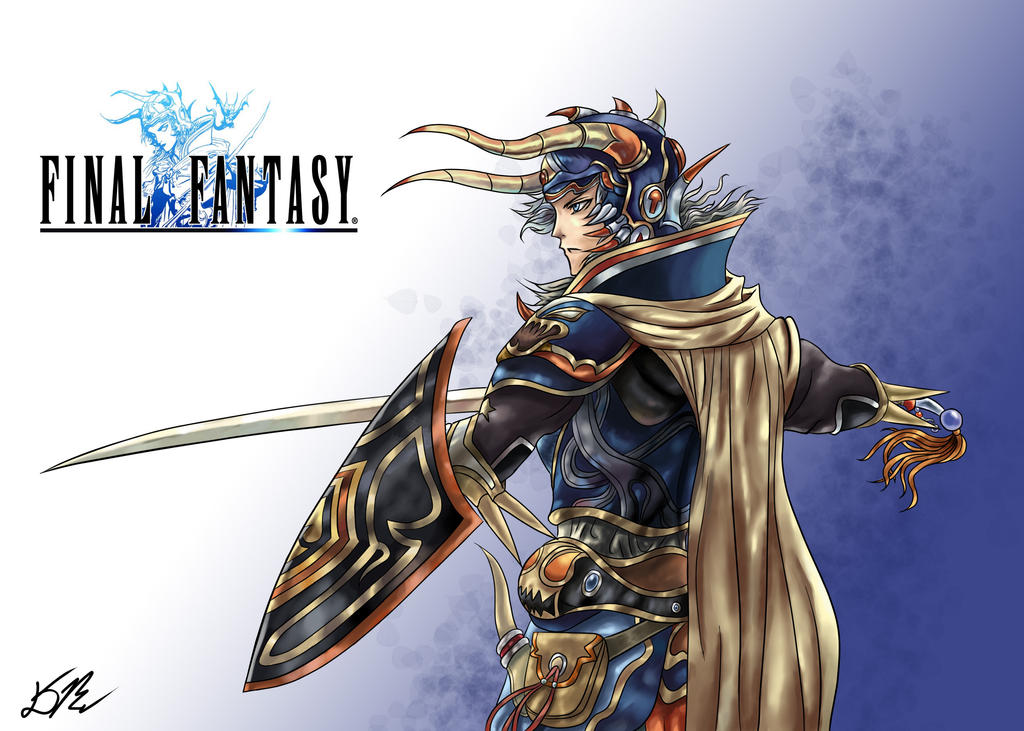
Fighter by KYONGHWAN KIM

Since I'm getting pretty close to a stable release it is time I start posting more excerpts.  Armor factored pretty decently into the last few posts on proficiencies so let's continue with that.

Here's how I handle Armor.  I use a similar system from the past that has been cut down, renewed, rewritten, retooled until eventually I found myself returning to Descending Armor Class.  Ol' Faithful.  Of course this has a twist.  I still use Armor as a way to reduce damage, now how do we reconcile that with descending Armor Class if lower is better?

Tuesday, November 19, 2013

Proficiencies in my game: Fighter Archetype

Warrior of Light by BaiHu27
Alright, after two posts examining proficiencies it's time to propose a solution.  A quick recap:
  1. Character Creation shouldn't determine the only weapons you wield in your career. 
  2. While the Fighter may share proficiencies he is still the best at wielding weapons.
  3. Not only can the Fighter wear heavy armor but he is still capable of quick movements

Taking that altogether here is the base Fighter Archetype I use in my games.

Saturday, November 16, 2013

Proficiencies: Final Fantasy


One thing I always liked was the portrayal of the Fighter in the original Final Fantasy.   He was a master of all arms and armor, he hit the hardest using the best weapons and could take as much as he could dish out wearing the thickest of armor.  This is never quite realized in D&D in my opinion.  Let's take a look at 3rd edition with allows for broad weapon and armor categories.  Sure the fighter classes can wear all armor and use all non-exotic weapons but it's really not that big a boon.  You might have a slightly larger die (d8 vs d6) comparing your martial weapon to a simple weapon (the elimination of speed factor is one less variable to differentiate between the two groups but that's worthy of its own post) and you're armor might provide you a marginally higher armor class (Heavy Range +5 to +8 VS Light +2 to +4) at the cost of seriously slowing you down and giving you tremendous penalties to useful skills.  That's before we get into the overly economic mithral chain shirt which eclipses most heavy armor provided you have a bit of dex and enough coin to buy Full Plate.  The point is, being trained to use better weapons and armor isn't much of a feature if the weapons and armor aren't markedly better.  Let's take a look at the original Final Fantasy a direct descendent of D&D.

Sunday, June 10, 2012

Disintegration with added Physics

Turns out that moving, changing work locations and hours took a lot more time than I expected to.  I haven't moved my laptop down yet either so I don't have my notes available so the posts I'll be tackling won't be especially substantive in game mechanics.  Instead here's a post I was considering in the A-Z Challenge for D and hopefully I'll be able to get a post out next Sunday as well.

Disintegration


Saturday, April 21, 2012

A to Z Challenge: S is for Slashing (Damage Types)

First post on Damage Types (Impact) is over here.

Continuing with damage types today I'm going to talk about slashing weapons.  A slashing weapon inflicts damage by moving the length of the blade in a cutting motion down the side of, well, whatever it is you're cutting. This can range from long gashes if you get the majority of the blade to cut to something as small as a little nick.  The actual cutting motion depends on the type of sword (curvature & weight distribution).  If you've spent enough time cutting onions you know there are plenty of ways to dice it and with different motions.  The same applies to heavier knives and swords.  The Khukuri for example is meant for a downward chopping motion followed by a cutting motion, a brute force weapon.  Compare this to the Scimitar, Shamshir or Talwar and you have a slender curved blade well made for slicing motions while on horseback as well as for quick slashes and flicks of the wrist while on foot.  While the methods of slashing may be different they all have one general outcome, to cause a lot of damage over a large surface area.  They also share the same weakness, they need to be able to cut through the surface.

A slashing weapon increases wounds dealt equal to its slashing rating on a critical hit or against lightly or unarmored targets.

Most light armor only cover the vitals (torso, possibly arm guards or shoulder guards) so for the most part a lot of skin is exposed, perfect for a razor sharp edge.  The critical hit clause is meant to represent when you have the perfectly aligned strike poised to hit their vitals and any seams or vulnerabilities in their armor.  So as we saw before, Impact weapons are very good at beating on armored foes, slashing weapons are quite adept at taking on lightly and unarmored foes.  Turning your average sword into a deadly weapon against the poorly equipped.

Tuesday, April 10, 2012

A to Z Challenge, I is for Impact (Damage Types)

Today I'm going to talk a bit about damage types, a tragically underutilized section of 3.X D&D and beyond.  If you're not familiar with damage types or with 3rd edition, there are typically three types that have remained constant over the years (and popped up occasionally in earlier editions like with the piercing immunities of your average menacing skeleton) which were Piercing, Slashing, and Bludgeoning.  All of which were pretty self-explanatory.  There was a lot of potential here, different weapons exist for a reason, primarily to impart their damage (force) in different methods.  Those methods adapted with the times, culture (fighting styles) and with the changes in armor.  There were a few occasions where damage type popped up, one of the Complete books allowed you to purchase Armor enhancements that gave you damage reduction vs a specific damage type and occasionally a monster might be resistant to all damages types but one.  The aforementioned skeleton would be resistant to all non-bludgeoning damage.  This was all mostly an afterthought though.  While D&D is well known for its abstract combat I can't help but feel damage types were an after thought.  So I've decided to do a little something with them without getting too gritty.

Sunday, April 1, 2012

A to Z Challenge: Armor & Armor Class

A is for Armor and in D&D it is most well known as Armor Class or AC for short.  In typical D&D Armor does not absorb damage but it instead deflects it.  This all or nothing principles has its origin in Iron Clad, a Civil-War battleship rules Dave Arneson worked on then adapted for D&D.  Now I've never been a big fan of this all or nothing approach, it works just fine for a battleship where a shell either pierces the hull or it doesn't but that's not how conventional worn armor works.  A while back during my crunch time posts I talked about one of the failures I had in Armor Class and trying to reverse Weapon vs AC.  A fool's bargain but it was an enlightening experience, now I would like to share the successor to that system which retains what I like most about OD&D's Armor, namely that the type of armor you wore was a class loose enough to be quick and abstracted and specific enough to account for different armor types.

Wednesday, February 29, 2012

Armor Class VS Weapon

Despite hitting the hay a bit early last night (and tossing up a reserve post to maintain my crunch time post quota) I've made a substantial bit of progress.  I've added all the revisions, rewrites and new material since my original draft many moons ago.  All I have left for now is the equipment section and a few clarifying sections for the basic prototype.  Now that I've spoken of my success let me share one of my more recent failures.

A while back I was reading a post over on Delta's D&D Hotspot that was referencing a posting over at myArmory forums about a gentleman who decided to test some authentic or equivalent medieval weapons against cheaply made chainmail as well as a handcrafted set of the highest quality.  It's an excellent posting and experiment be sure to check it out when you have the time.  The test showed how different European weapons, as well as a katana thrown in to highlight a few differences, would perform against the most common of medieval armors, chainmail and jack (layered textile most closely related to brigadine.)  The tests provided some excellent insights and I thought I might veer more towards simulation side of game taxonomy [1] for my weapons system.  Mind you, this was before people declared with great fortitude their staunch distaste for weapons vs armor class in Jeff Rient's poll. Furthermore, I had already taken a stab at this before and the results were more trouble than they were worth.  Still I was sure this time would be different.


Wednesday, September 21, 2011

Playtesting Mark 1

With some excruciating work I've managed to finalize the level 1 abilities for 4 of the starting classes.  I've also managed to narrow down what stats I wanted to include and how I would use them and set values for them.  On top of that I had a rudimentary combat system and I was itching to test the new Stamina mechanic, Class features as well as the smoothness of combat.  So a playtesting we go.

In previous posts I've talked about Hit Points, Wounds, Armor and Defense.  Since then I've reevaluated and revised these to make them more elegant.  Since many people's gripe with armor as damage reduction is that it slows down the game and adds unnecessary rolling.  So my solution was to originally have armor affect only your Wounds ignoring HP altogether as hit points represent your ability to not be hit.  This meant that there would be an extra die roll but it would only come up at certain and important times.  Since armor had become slightly marginalized I decided to swap from differing dice sizes to different amounts of dice, adopting a 1d6/2d6/3d6 spread for light, medium and heavy armor respectively.

Of course things didn't stop there, I started thinking about people who had little in the ways of Defense (the first of three lines of defense before imminent death) who would prefer to wear heavy armor.  In this case their HP would quickly be chewed through before reaching Wounds at which point their armor would kick in.  To this I proposed two solutions.  The first was that you could voluntarily have faith in your armor and allow an attack to go straight to wounds bypassing HP entirely.  This set up a sort of gamble in that the character could probably guess which attack his armor could absorb entirely but of course some attacks may be more than meets the eye.  It's risky and I like it, and it's why I've decided to keep it.  The other solution..not so much.

The second proposal was that armor would provide a flat damage reduction for HP, a 1/2/3 spread for the light/med/heavy armor categories.  This eliminated the need for extra rolling and provided a benefit to people wearing heavy armor even if their defenses were extremely poor.  It sounds nice but in actual playtesting it's far from it.  For a player (and DM's armored NPCs) it's one more thing to remember for every time he takes damage.  Mathematically there is a snafu when damage exceeds HP and goes straight to wounds.  As an example if the player is wearing medium armor and has 4 hit points left and the DMs monster deals 7 damage to him there are a few mental gymnastics you need to do before you can resolve this.  First the 7 damage is reduced by 2, down to 5, this 5 is deducted from hit points leaving 1 damage remaining which carries over to wounds.  The wounds then have an armor rating of 2d6 nullifying the damage.  You can see how that can be confusing and the opposite of rapid combat.  You could create rules and caveats that could manuever around this problem but that would make much less elegant and one more aspect of combat the DM keep stored in his working memory.  So out the door it went.

Aside from that the rest of things went fairly smoothly.  The basic premise of the spell/shaping and mana system turned out fine but as for the actual execution it still needs some work and an eye for balancing it out at higher levels.  The importance of speed was not recognized until actual play and it gave me an elegant idea of what bonus to give people that are unarmored (+1 speed).  Stamina was interesting but partially forgettable due to it's overlap with speed and because the player was getting used to other abilities.  Class features and weapon qualities were all distinct and gave each character their own combat flair.  All in all it was a pretty good playtest and I'm psyched for the future.  Now if only editing and publishing tools weren't so irritatingly inefficient.

Wednesday, March 16, 2011

Armor & Hit Points

I had been toying with an idea recently about changing the nature of how Armor would work.  I reasoned that having Armor's damage reduction (DR) apply to every attack could slow down the game by adding to the number of rolls on any given turn in combat.  Having magical weapons bypass non-magical armor would ameliorate the problem to a degree while simultaneously making magic items more awesome (something I'd like to do and move away from Christmas Tree effects.)  However, since the PC's are likely the ones to be packing magical heat all this does is eliminate the rolling for enemies who, when aren't humanoid, frequently do not wear armor.

I came up with another idea based on realism which is so often sought after by out of touch GM's and simultaneously reviled by players just looking to have fun.  Well hopefully this idea doesn't fall into that category.  See I considering having armor apply only to when your Wounds take damage.  [Wounds are discussed here]  Since armor exists to protect those valuable squishy organs and wounds are a reflection of how close you are to dying it goes to reason that armor should invariable be protecting your wounds pool.  This is all well and good but it prompted a discussion on the nature of Hit Points.

As I've always described them to my new players; Hit Points represent your ability to avoid being hit as well as your ability to turn any serious hit into a glancing blows.  It was a simple explanation and it worked but I never really questioned it until now.  For the first part of that definition if hit points represent avoiding hits then why should armor apply.  It certainly did in classic D&D when an attack that made it past your armor class (AC) reduced your hit points.  Looking at it from that perspective armor merely served to turn away all inconsequential blows while an attack that would make it past your armor's defenses prompted a reaction out of you.  Putting it into a narrative perspective this is represented by counting on your armor to absorb a blow but occasionally you will see an attack rapidly approaching a vulnerable point and it's up to you to duck under the beheading stroke.  Examining the abstract nature of hit points again it stands to reason that reduction in hit points can be seen as fatigue setting in.  It becomes harder and harder to parry, duck, dodge and weave until eventually the killing blow comes and that last hit point is mercilessly erased from your sheet.

Looking at it that way Armor could certainly be applied to hit points without the need for head scratching and lengthy explanations (except this one of course).  Let's move a step beyond that and redefine hit points a bit.  In the previous example Armor was the first line of defense turning attacks into a harmless clanging of steel on steel while hit points were a secondary defense occurring only when armor would be defeated.  Let's switch things up a bit and reverse their roles.  This time all attacks carry an air of lethality with them transforming hit points into your first line of defense while armor is the last barrier between you and death.

If this sounds familiar it's because I'm circling around an argument I made in my post about Defense regarding lines of defense.  I haven't forgotten about defense and organizing these three into a hierarchy it goes something like this.  At the top we have defense this serves the purpose of telling which attacks are considered a threat and which can be ignored and if you're feeling particularly bold laughed at.  Below that we have hit points which represent your ability to get out of the way of a potentially life threatening attack.  At the bottom we have armor which is there to stave off the attack that finally wears you down or in the worst case scenario the lucky critical that catches you off guard.  Where things get interesting are the interactions between these three.  Wearing heavier armor limits your Dodge defense which in turn means you are more likely to lose hit points and thus your armor will come into play faster and more often and vice versa.  In essence heavy armor justifies it's own existence.  Sounds silly doesn't it?  Well in a game system where heavy and light armors should be viable these trade offs become a necessary evil intent on squashing the foolish dreams of your full plate fighter with an 18 Dex.

I have some more thoughts on redefining hit points, hit dice specifically, but I will save that for a later post.