Showing posts with label weapons. Show all posts

Tuesday, November 19, 2013

Proficiencies in my game: Fighter Archetype

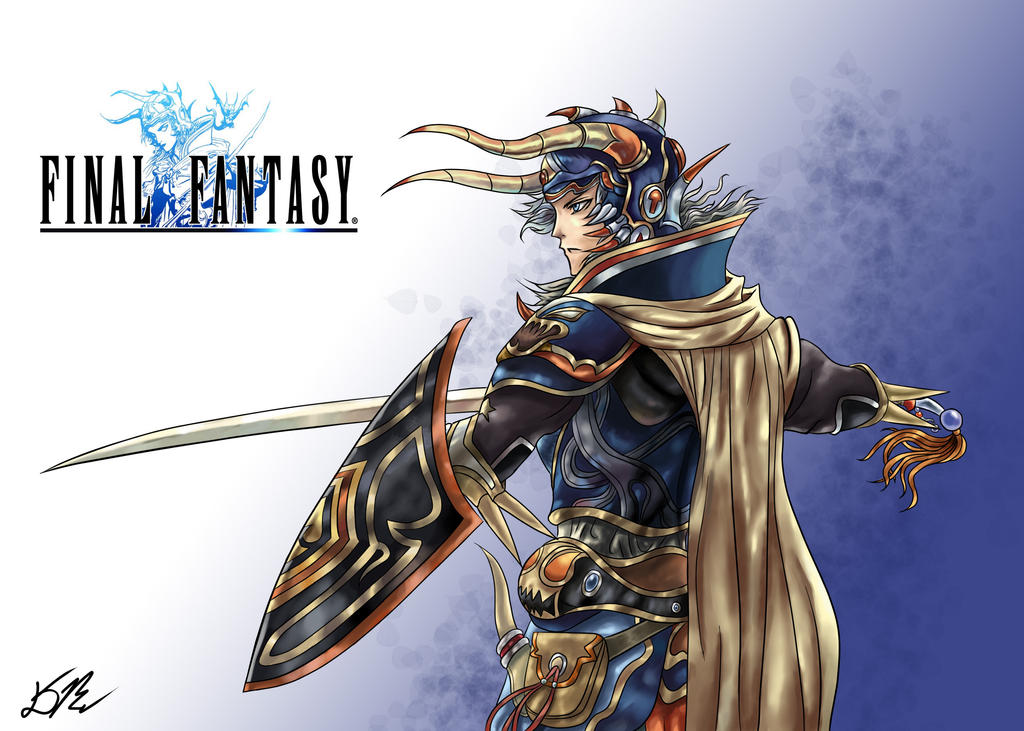
Warrior of Light by BaiHu27
Alright, after two posts examining proficiencies it's time to propose a solution.  A quick recap:
  1. Character Creation shouldn't determine the only weapons you wield in your career. 
  2. While the Fighter may share proficiencies he is still the best at wielding weapons.
  3. Not only can the Fighter wear heavy armor but he is still capable of quick movements

Taking that altogether here is the base Fighter Archetype I use in my games.

Saturday, November 16, 2013

Proficiencies: Final Fantasy


One thing I always liked was the portrayal of the Fighter in the original Final Fantasy.   He was a master of all arms and armor, he hit the hardest using the best weapons and could take as much as he could dish out wearing the thickest of armor.  This is never quite realized in D&D in my opinion.  Let's take a look at 3rd edition with allows for broad weapon and armor categories.  Sure the fighter classes can wear all armor and use all non-exotic weapons but it's really not that big a boon.  You might have a slightly larger die (d8 vs d6) comparing your martial weapon to a simple weapon (the elimination of speed factor is one less variable to differentiate between the two groups but that's worthy of its own post) and you're armor might provide you a marginally higher armor class (Heavy Range +5 to +8 VS Light +2 to +4) at the cost of seriously slowing you down and giving you tremendous penalties to useful skills.  That's before we get into the overly economic mithral chain shirt which eclipses most heavy armor provided you have a bit of dex and enough coin to buy Full Plate.  The point is, being trained to use better weapons and armor isn't much of a feature if the weapons and armor aren't markedly better.  Let's take a look at the original Final Fantasy a direct descendent of D&D.

Wednesday, November 13, 2013

Proficiencies: Baldur's Gate


When I first started this I never expected I'd make it to 100 posts (and I passed it a while ago).  I started this blog as a way to bounce ideas around, to get a better idea of what I wanted to do and how I wanted to implement them.  Plus, I needed to start writing again because if I wanted to put together a book I better return to my eloquent ways.  That said this is a post I've been working on for a while.

Wednesday, July 10, 2013

Dark Souls: Choice in Weapons


This time I'm going to look at choosing a weapon and how it is handled in Dark Souls.  The most basic thing to take a look at is whether or not you can wield it, that is do you meet or exceed the stat requirement?  As I mentioned before the Souls series is designed so that you can complete the game right from the get go and that is still true here.  Most straight swords required a decent but average mix of strength and dexterity, curved weapons require more dexterity while axes and hammers require more strength to heft properly.  For the most part almost all weapons can be wielded from the get go provided they fit the base stats your archetype gives you (your thief won't be wielding morning stars and your iron clad knight won't be firing any bows from the get go).  The only weapons that require stats beyond what is given at level 1 are the extremes:  the freakishly large swords, axes, and shields that require equally absurd strength requirements or the specialist katanas that require a good deal more Dex to make use of their Iai strike and elongated edge.

Monday, April 23, 2012

A to Z Challenge: T is for Thrusting (Damage Types)

Although work is conspiring to soak up all my available time I still have a few waking minutes left to get out a post.  I never would have expected the A-Z Challenge would have run me this ragged.

So without further adieu and much brevity attended I'll be fnishing up the damage types series.  Starting with Impact Weapon and Saturday's Slashing Damage.  I'll be skipping the introduction this time as it is much better laid out in Impact Weapons so here's the meat of the rules.

If any Wounds are dealt with a Thrusting weapon, the target takes additional Wounds each round equal to the weapons Thrusting Rating until they bleed out or the wound is stymied.

This is the current version.  It matches the form of the previous two, in that the effect is dependant on the weapons rating in Impact, Thrusting or Slashing.  However, one thing that bugs me is that through playtesting it was found that the easiest way to do Wound loss is to simply cap it at 1 Wound lost each round.  It's easy to remember, doesn't require you to look up or anything, least of all the thrusting rating of various weapons.  So here's the proposed redesign.

If any Wounds are dealt with a Thrusting weapon the target takes an additional Wound each round on their turn until they either bleed out or the wound is stymied.  Additionally, each time the weapon deals Wounds to a target (including bleeding damage in later turns) they lose HP equal to the weapon's Thrusting rating.

This removes some of the bite and makes the weapon less lethal, which is a good things since bad guys wield spears too.  It also means that a Thrusting weapon is the best weapon for attrition, while the impact weapon is the best for facing off vs armor and the slashing weapon is the best weapon for quickly cutting down foes, but mostly limited to lightly or unarmored folks.

There you have it!  Now if you'll excuse me I have a date with the crack of dawn.

Saturday, April 21, 2012

A to Z Challenge: S is for Slashing (Damage Types)

First post on Damage Types (Impact) is over here.

Continuing with damage types today I'm going to talk about slashing weapons.  A slashing weapon inflicts damage by moving the length of the blade in a cutting motion down the side of, well, whatever it is you're cutting. This can range from long gashes if you get the majority of the blade to cut to something as small as a little nick.  The actual cutting motion depends on the type of sword (curvature & weight distribution).  If you've spent enough time cutting onions you know there are plenty of ways to dice it and with different motions.  The same applies to heavier knives and swords.  The Khukuri for example is meant for a downward chopping motion followed by a cutting motion, a brute force weapon.  Compare this to the Scimitar, Shamshir or Talwar and you have a slender curved blade well made for slicing motions while on horseback as well as for quick slashes and flicks of the wrist while on foot.  While the methods of slashing may be different they all have one general outcome, to cause a lot of damage over a large surface area.  They also share the same weakness, they need to be able to cut through the surface.

A slashing weapon increases wounds dealt equal to its slashing rating on a critical hit or against lightly or unarmored targets.

Most light armor only cover the vitals (torso, possibly arm guards or shoulder guards) so for the most part a lot of skin is exposed, perfect for a razor sharp edge.  The critical hit clause is meant to represent when you have the perfectly aligned strike poised to hit their vitals and any seams or vulnerabilities in their armor.  So as we saw before, Impact weapons are very good at beating on armored foes, slashing weapons are quite adept at taking on lightly and unarmored foes.  Turning your average sword into a deadly weapon against the poorly equipped.

Tuesday, April 10, 2012

A to Z Challenge, I is for Impact (Damage Types)

Today I'm going to talk a bit about damage types, a tragically underutilized section of 3.X D&D and beyond.  If you're not familiar with damage types or with 3rd edition, there are typically three types that have remained constant over the years (and popped up occasionally in earlier editions like with the piercing immunities of your average menacing skeleton) which were Piercing, Slashing, and Bludgeoning.  All of which were pretty self-explanatory.  There was a lot of potential here, different weapons exist for a reason, primarily to impart their damage (force) in different methods.  Those methods adapted with the times, culture (fighting styles) and with the changes in armor.  There were a few occasions where damage type popped up, one of the Complete books allowed you to purchase Armor enhancements that gave you damage reduction vs a specific damage type and occasionally a monster might be resistant to all damages types but one.  The aforementioned skeleton would be resistant to all non-bludgeoning damage.  This was all mostly an afterthought though.  While D&D is well known for its abstract combat I can't help but feel damage types were an after thought.  So I've decided to do a little something with them without getting too gritty.

Saturday, March 10, 2012

Activating Magical Items

Brendan over at Untimately is having an interesting discussion on the experimentation and identification of magic items.  My comment grew so long I decided to turn it into a blogpost of its own so here we are.

When I first started as a player any weapon that was given a description, even as something as common as an ornate hilt, was deemed potentially magical and it was held onto until such a thing could be determined.  This mindset has transferred to my players when I took up the DM mantle.  It helps that they behave as hoarders for even the most trifling of items.


As for how to determine the actual magic properties of an item this is a bit of a tough call.  Josh D. is right that if you don't tell them what it is then keeping track of +1 to hit and damage can be a bit of a pain.  The way I've been doing it has been to rethink how magic items, weapons specifically, work.

Wednesday, February 29, 2012

Armor Class VS Weapon

Despite hitting the hay a bit early last night (and tossing up a reserve post to maintain my crunch time post quota) I've made a substantial bit of progress.  I've added all the revisions, rewrites and new material since my original draft many moons ago.  All I have left for now is the equipment section and a few clarifying sections for the basic prototype.  Now that I've spoken of my success let me share one of my more recent failures.

A while back I was reading a post over on Delta's D&D Hotspot that was referencing a posting over at myArmory forums about a gentleman who decided to test some authentic or equivalent medieval weapons against cheaply made chainmail as well as a handcrafted set of the highest quality.  It's an excellent posting and experiment be sure to check it out when you have the time.  The test showed how different European weapons, as well as a katana thrown in to highlight a few differences, would perform against the most common of medieval armors, chainmail and jack (layered textile most closely related to brigadine.)  The tests provided some excellent insights and I thought I might veer more towards simulation side of game taxonomy [1] for my weapons system.  Mind you, this was before people declared with great fortitude their staunch distaste for weapons vs armor class in Jeff Rient's poll. Furthermore, I had already taken a stab at this before and the results were more trouble than they were worth.  Still I was sure this time would be different.


Wednesday, September 21, 2011

Weapon Types Another Look

I had taken a few cracks at making weapon lists before, each with varying degrees of success.  My most current model as them organized categorically with the idea that weapons created in a similar way, with similar heft and balance, as well as mode of damage should be grouped together.  This way someone using a longsword should have no problem picking up a short sword and someone used to using a mace should be able to freely swap it out with a morning star.  It's simplistic and sensible (on the surface at least) and that's what I'm all about.

As it stands there's about a half dozen categories for melee weapons only.  Of course one thing that I carried over from the 3.x days were damage types, specifically Slashing, Piercing and Bludgeoning.  I liked the idea behind it, that weapons had differing ways of dealing damage and that enemies and certain armors (given the right splat-tastic book) would treat some damage types as ineffective and others as effective.  This was predicated on the somewhat bizarre system of 'I have damage reduction against everything but this'.  So for example a skeleton may have DR 5/Bludgeoning.  Now we can all agree that an arrow or the thrust of a dagger should have little effect on a walking, talking (well maybe not talking) skeleton.  A sword slash would also be inefficient since a slash is geared towards soft targets  but not to the same degree as a stab would be.  In this respect you would think that the piercing type weapon would be ineffectual, the slashing weapon would have reduced effectiveness and the bludgeoning weapon would reign supreme.  However, in this odd DR/"My One Weakness!" system all damage types save the magic bullet are penalized.  So to remedy this you could adapt the system to be more flexible or build something from the ground up.

Then I read this interesting post over at Delta's D&D Hotspot and the subsequent discussion in the comment section and I was very impressed.  So much so that I spent some time skimming over the exhaustive work of Matthew James Stanham of Silver Blade Adventures fame in this post on Dragon's Foot.  Matthew's post takes a look at how the interactions between specific weapons and armor class evolved organically between the edition's of D&D and it's precursor Chainmail.  If you're interested in mechanics changes over the ages it's some very interesting stuff so take a look.

In the meantime I'd like to take a look at the categories of damage types outlined in the comments section of Delta's post.  To summarize the contents of the posts and citations; the basic principle is that the more concentrated the force of impact the more likely the user was to damage the target.  Conversely, the more surface area (and I'd wager thickness although it's not clearly stated) of the armor that catches the impact the more the force of the blow can be spread out and absorbed by the armor rather than it's occupant.  A fairly straightforward principle grounded in basic physics.  It reminds of me of a weapons and armor lecture I had in school where one of the topics we discussed was laminated armor and how a single uniform sheet of material could better absorb an impact rather than multiple plates riveted together.  Of course, like all armor there is no one size fits all approach and there are very likely times when piecemeal construction would be more suitable, ablative and reactionary armor immediately come to mind but I digress.

Now that we have the guiding principle down let's look at the construction and intended use of different categories of weapons.  I will be quoting Matthew who is quoting Catherine Hanley author of War and Combat who appears to be quoting Gamble.   My aren't citations an tangled web of confusion?

The axe was a powerful weapon, as Gamble explains: 'By combining a relatively smaller curved edge with a heavy head, all of the striking force was combined to hit in a small area, which is opposed to a sword in which the force is distributed evenly along the entire length of the blade.'
"The axe, with its greater weight concentrated behind a smaller cutting edge, had the potential to inflict terrible wounds if used to its maximum effect, as did the mace, whose heavy head was capable of smashing bones even through layers of armour."

Now if we look at this we see that the Axe is almost guaranteed at inflicting damage against an armored opponent due to the force being confined to not only a small area (the axe head) but an even smaller area on the edge.  Compare this with a hammer which has a similar principle of confining the force to the head but the flat blunt edge causes the force to be spread out.  I think the sword comparison is especially apt since the Axe and Mace are making full use of the wielder's moment, err sorry torque, much like how it is easier to use a wrench or open a door the further your arm (and the force you exert) is from the pivot point.  Contrast this with a sword whose impact can be anywhere from the tip (maximum torque) to the cross guard.  While this makes for a versatile weapon allowing two forms of damage, cutting and impact as Matthew later explains, it does however limit it's effectiveness at penetrating armor.

Now then, since we've looked at the basic physics on how the weapon deals damage let's think on how to translate this to game mechanics.  If we define damage, or perhaps more specifically damage dice, as a reflection of how much harm the weapon deals to the users body there are two ways to look at the Axe.  First off, it's construction makes it very likely to penetrate armor and thus chop into the target's body.  However, it's small area of impact also means that only a small portion of the users body will be hit.  Of course if the axe embeds itself deep enough this could lead to a very severe injury.  Looking at it this way we see that the axe has a good chance of causing moderate wounds, however due to the nature of it's construction if it hits the right place and makes a deep enough wound it could be very fatal.

Putting this into game terms I would give the axe a small damage die (d4 or d6) and a large critical, whether it be critical modifier and/or critical range depends on your interpretation. If it's a system where armor is used as a target number to hit then the axe would receive a bonus to hit for armor.  Comparatively the simple sword whose damage, if using a cutting motion, depends on the amount of area the blade is able to slice leads to a highly variable damage.  Let's say damage dice of d10 or d12 with a bonus to hit against lightly or unarmored targets.  Lastly, we have the mace which relies on similar principles of operating as the axe.  It does not however have the Axes simultaneous strong and weak point of minimal area/focused impact making the mace the least variable in terms of damage, let's say 2d4 for the good average.  This is just a shot in the dark here but I'd wager that mace can more easily transfer it's force through the rigid metal of plate than it could the soft and flexible material of leather or hide.  Similarly, if the plates in platemail are non-overlapping the mace would have an even easier time of transmitting force than it would moving through the non-uniform interconnected layers of chain or scale mail.  For this reason I would give the mace a bonus to hit versus banded and plate mail, a penalty to hit vs chain/ring or scale mail and no modifier versus light armor of leather or hide (although I'd have to reconsider for brigadine).

To quickly summarize we have
Weapon    Damage     Critical          vs Armor
Axe            d6             18-20/x3       +1 hit any armor
Sword        d10           19-20/x2       +1 vs light, -1 vs heavy
Mace         2d4            20/x2            +2 vs plate/banded, -2 vs mail

Note: These values are for the most part created in a system vacuum.

This was whipped up on a bout of inspiration so I'm sure there are a few flaws in the logic and reasoning here and there.  I'd like to take a look at the methods of damage dealing Matthew describes, cutting, thrusting, and impact, but my creative urges have already expired so I'll leave them for a later post.  That being said if you have any thoughts you'd like to share on the matter I'd very much welcome them.