Showing posts with label Class Mod. Show all posts

Tuesday, November 19, 2013

Proficiencies in my game: Fighter Archetype

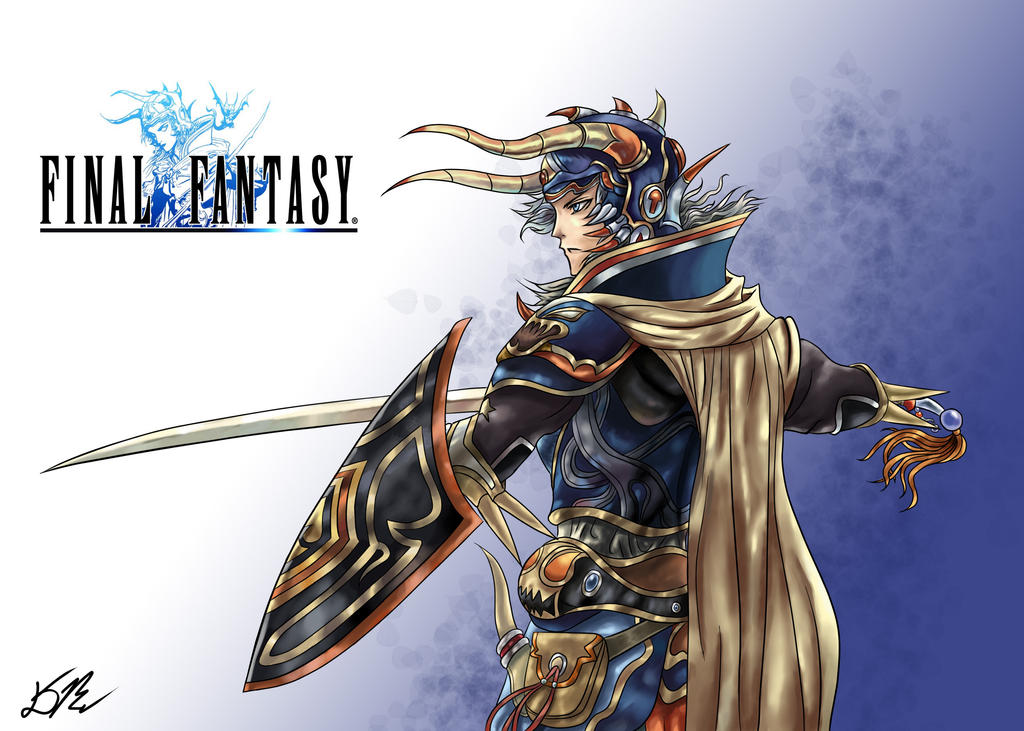
Warrior of Light by BaiHu27
Alright, after two posts examining proficiencies it's time to propose a solution.  A quick recap:
  1. Character Creation shouldn't determine the only weapons you wield in your career. 
  2. While the Fighter may share proficiencies he is still the best at wielding weapons.
  3. Not only can the Fighter wear heavy armor but he is still capable of quick movements

Taking that altogether here is the base Fighter Archetype I use in my games.

Friday, September 27, 2013

30 Days of D&D Challenge Day 28: Future Characters

A designer at heart I don't think of playing a new character so to speak but in the future but whenever I see a new class or game system I am excited to give the class or archetype a try.  Rather than try to find a class to fit my concept I prefer to find a class and build a character concept around it.  Playing a new class is getting a chance to try another creative expression the designer advocated in their system and playing it is the best way to appreciate the strengths and flaws in their design.  It is also the best way to learn to improve upon your own design.  So I'll list a few classes that have piqued my interest but I have not gotten around to playing because nearly all my time is spent behind the screen.

OSR Retroclone
Labyrinth Lord AEC

Monk, just the simple fact that the monk can be quite capable with a melee weapon as he can be with his fists is very appealing to me.  As an avid lover of kungfu flicks I've never actually played a martial-artist but this particular rendition of the Monk would be where I start.  Out of all the editions this is my favorite version of the monk.

Of course the next OSR game I run will likely include Dyson's d12 Subclasses


Tuesday, November 22, 2011

Class Kits on the Fly

The last time I ran a D&D game I ran a slightly modified Labyrinth Lord.  There were three available classes, Fighter, Rogue & Cleric/Cultist.  There were no Wizards on account of them all being wiped out in a cataclysmic event in the setting.  However, that same cataclysmic event also endowed every sentient creature with the ability to cast arcane spells.  Essentially, everyone was multi-classed Wizard at no penalty and the only spells you knew were from the scrolls you picked up.  Scrolls were not consumables but rather represented your own personal library of spells.  I'm going to list the three classes and my slight modifications below.


----------------
Fighter
Originally I gave the Fighter a "Master of Battle" ability that allowed them to attack as many hit dice as the fighter had levels.  So a 5th level fighter could attack two 2HD creatures and one 1HD creature, or three 1HD and one 2HD, etc.
Getting the wording right was a bit awkward so I've been leaning towards the old chainmail rule where they can make an attack for each HD they had.  Meaning that 8HD superhero could make 8 attacks.  For simplicities sake if multiple attacks are made against the same target it is resolved with one die roll and you roll as many dice as required (3 attacks -> one to hit roll and 3 damage dice).

Fighter's also had a variant of AD&D's weapon specializations and the optional Naked Warrior Rule.

Rogue
"Stunt - Anytime the Thief viscerally describes some crazed stunt they'd like to perform such as swinging across chandeliers, using a silver platter as an impromptu shield, riding an enraged stag by the horns, or jumping out windows in their best Bruce Cambell impression they receive a stunt bonus to the die roll equal to 1 + half their level. This bonus can be applied to just about any roll involving a d20 (attacks, saves, skill/ability checks) as well as for damage rolls and reaction rolls."


The only thing I would change now is that it gives a bonus to damage/reaction dice rather than a simple  modifier.

Cleric
I had previous used a Judge's Guild optional rule that allowed character to regain d3 HP at the end of combat. Originally I was going to replace the d3 with the class HD but I decided to forgo all variable dice for that game (d6's for everybody!).  Instead at the end of combat a cleric would have the party roll 2d6 and take the higher value as HP regained.

This ability proved to be quite powerful and could lead to near infinite adventuring (not necessarily a bad thing).  There was a bit of a disconnect as well because after a battle a party could end up with more hit points than what they started with.  To rectify this I'm going to try out a system I'm rather proud of which should eliminate disconnect altogether.  If it works well I'll keep it in the beta version of my game system.

Cleric's could also spontaneously cast Cure spells.

Cultist
These crazy fools worshiped the Shrike, also known as the pain lord, an inscrutable being made of free-flowing metal and spikes that travels backwards through time.  If you've read the Hyperion Novel's by Dan Simmons you should be familiar.

At first level I decided to give the Cultists an ability related to the Pain Lord's effect on time and entropy.  The best I could come up with would be to affect group initiative and I decided to go with their enemies.  It wasn't particularly powerful (although the Cleric's ability would end up being) but it was by far the player's favorite.

Entropic Adjustment: When rolling initiative enemy groups must roll twice and take the lower result.

Cultist's could also spontaneously cast Inflict spells.
------------------------

The guiding principle behind these class touch-ups was that the ability granted would either improve with them as they level (Fighter and Rogue) or it would provide a set benefit that was useful at all levels of play and they would receive separate abilities later on that would build on the theme of the class (Cleric/Cultist).  As an example at level 10 the Cultist was going to be able to take two actions per round with the downside that his permanently hasted body would lead to a very early demise.

Now I've taken the time to repost these class tweaks and analyse them for a reason.  The next time I run a D&D/LL game I plan on using Class Kits.  For those unfamiliar, a kit was a way to customize or create a variant of a class.  The fighter could be a berserker or a kensei, a ranger could be a beast master or an archer, a bard could be a blade or skald, a cleric could have a kit based on his god which would later grow into the Domain abilities introduced in 3.x.  The kits were a nice way to personalize a class without mucking around too much.  Most of them gave a fairly significant combat modifier or granted some neat ability used a few times a day.  Now, when I say I'm going to introduce kits I'm not actually going to write out a bunch of kits and pass them around to players since it's very unlikely that a premade kit will fully envision what the player has in mind.  Instead we'll talk about what kind of character they would like to play and we'll work out the finer details by choosing one of the three class archetypes above and creating the kit on the fly.

Kitting on the Fly

So let's say you want to play a Barbarian or a Berserker.  You start you off as a Fighter and decide they will be limited to Hide armor based on iconic barbarians, berkserkers and vikings.  We also decide that you'll have a rage type ability that boosts your damage, strength checks and capacity to take damage.  Now we may go the route of having it be a set number of times a day or we can have you go berserk at will with the risk of you losing control.  Said risk increases as the battle wears on.  We could also combine the two, where the set number of day represents the number of times you can rage without fear of losing yourself.

How about a Ranger?  He gains a favored enemy, woodland skills and has an edge on surprising creatures.  In exchange he'll lose the specialization of the fighter and have a more restricted armor choice.

Seems simple enough right?    Grant an advantage or two and add a few defects.  In the above examples the Berserker's ability came with it's own disadvatage, losing control, while the ranger had to give up a powerful class feature, their starting weapon specialization.  Let's try a few more.

Want to make a Spellsword type Gish?  Sure, you're a fighter with an offensive wizard spell list that can cast through their blade, with shocking grasp represented by electrified steel or activating burning hands while your sword misses in a wild arc producing a fan of flames.  The spell list is restricted to offensive spells and they cannot wear armor heavier than leather or mithril/elven chain.

Want to play Gygax the level 27th level warrior mage?  {My apologies in advance for the annoying sound effects inserted.}  Sure, you're a Wizard in heavy armor with a mostly defensive spell set.

In the first case you are gaining an ability, discharging spells through your sword, with the disadvantage of a restricted spell list.  Being able to cast in armor is balanced by the limited armor selection.  The battlemage on the other hand retains his armor selection and spell casting but forfeits the bread and butter of spell repertoire. Since in this particular game anyone can pick up a scroll or wand so the addition of the Wizard's spell list is a relatively minor modification.

Now I haven't laid any actual groundwork here for a reason.  I'd rather provide examples in place of guidelines because even an easy heuristic like 1 advantage for every disadvantage can become clunky when you begin weighing the benefits, frequency of use, an significance of abilities against each other.  Plus, examples serve as kindling for the imagination and you may have thought of a few kits of your own by the time you read this.

If you'd like to try this yourself make sure you work with your players and create something that is not immediately unbalanced and everyone agrees would be fun to play.  Always remember, what may seem fine on paper may absolutely wreck things in actual play.  And of course the opposite can also hold true.
Saturday, June 4, 2011

Serpent Sovereigns

I've been kicking around an idea for a Labyrinth Lord game since March and I was finally able to run a test-run last month.  My players like it enough that we're continuing to play it to this day.  Here's the gist of it.

Background:
In ages long past a war of magic finally culminated in a catastrophe that tore the continent apart, wiped clean every mage on it and sunk the southern kingdom into the murky abyss.  The remaining kingdoms agreed to an armistice after witnessing the devastation they had caused.   The people seeing the folly of man took it a step further.  They overthrew their leaders and installed another, one that was no man.  Legends depicted Dragons as the early protectors of mankind, the watchful elder that took pains to protect them but allow them room to grow.  The people put a Serpent on the throne.  Unfortunately, like in all things, absolute power corrupts absolutely.  The benevolent dragons of the past eventually became the hated all-powerful despots of today.

Focus:
The player characters are members of a rebel organization known as Dragon Slayers.  Their ultimate goal is to depose the Tyrant Lizards and bring the power back to the people.  They are currently lacking any and all resources to do so and like any group of ne'er-do-wells they have many conflicting viewpoints on how to go about their business and what to do once the deed has been done.

Gameplay will be a mix of old school dungeon crawling as the PC's descend into the depths of ancient undisturbed ruins to retrieve magical scrolls that will give them the firepower they need as well as a healthy dash of shadowrunning as they make their way into bigger cities.  Their goal is to avoid drawing attention until they are finally ready to make their move. 

Along the way the PC's will try and recruit talented blacksmiths, sages and alchemist as well as courting wealthy merchants for funds to advance their operations.  They shall seek material resources to improve the paltry weapons and armor they being with.  They seek allies to increase their ranks and their skill sets.  Most importantly they must carry the will of the people with them .  There's no point in a coup if everyone is satisfied with the status quo. 


Setup
Following the events of the war of magic all magic-users were vaporized so there is no magic-user class. Instead the widespread mage fallout over the land has granted anybody with the knack to cast spells.  There is however, the unfortunate fact that magic has been banned in every kingdom.  So while anyone can cast magic they can also get themselves into heaps of trouble for doing so.

Starting classes are Fighter, Thief, and Cleric with other classes becoming available as the PC's strike bargains and form alliances with neighboring barbarian tribes, monastic orders, rebellious elves, enlightened dwarves and recluse rangers and druids.  Clerics come in two varieties:  priests that worship the forgotten old gods that most of the population forsook after the war of magic devastated the country and shrike cultists that believe in a prophecy that the Pain Lord will one day return traveling through time to destroy everyone and everything (How nice!).

I've given all the classes an ability at level 1 that either grows with them in level or greatly bolsters their effectiveness in a team setting.  They are as follows:

Fighter:
Starting HD: 2d6.
Gain a specialization at level one (expect a weapon specialization post later).
Also gain the Master of Battle ability.  The fighter can attack a number of hit dice equal to his level.
 So a 5th level fighter can attack a 3HD and 2HD creature with one attack, or two 2HD creatures and 1HD creature, or five 1HD creatures, etc.  Basically a simpler and more broader take on the <1HD ability Fighters gained in AD&D.
Optional:  Naked Warrior Challenge:  An idea I loved then adapted from Aeons & Augauries.
Any Fighter going into battle unarmored with not more than a helmet and loin cloth (and shield if they like) receives double combat experience.  They may also attempt to woo the opposite sex as an immediate reaction.

Thief:
Stunt - Anytime the Thief viscerally describes some crazed stunt they'd like to perform such as swinging across chandeliers, using a silver platter as an impromptu shield, riding an enraged stag by the horns, or jumping out windows in their best Bruce Cambell impression they receive a stunt bonus to the die roll equal to 1 + half their level.  This bonus can be applied to just about any roll involving a d20 (attacks, saves, skill/ability checks) as well as for damage rolls and reaction rolls.
(Since my players are complete neophytes to old school roleplaying I created this ability with the intention of teaching them to describe their actions rather than "I attack, 14, hit?" or "The priestess asks you to chase the fleeing fiend into the portal he ripped open in the town square.  Do you accept?   Player: Diplomacy, 17, give us money."  The incentive seems to be working decently so far.)

Cleric:
Priest of the Old Gods 
Blessings - At the end of combat allies can roll 2d6 and take the higher roll when regaining hit points.
The priest can also spontaneously turn any memorized spell in a cure spell of the appropriate level.
(Normally I use the old Judge's Guild optional rule of regaining a d3 of HP at the end of an encounter but I had planned on it being the classes Hit Die rather than a simple d3.  Since I've decided to avoid variable damage and hit dice for a change they instead regain a d6.)

Shrike Cultist
The Cultist forgoes the use of weapons and instead uses the spines they crafted into their armor to better resemble their imaginary Deity.  It is treated as an unarmed strike that gets progressively better as their armor improves.  Additionally anyone attacking a Shrike Cultist in full Painlord gear takes retributive damage from their spiky armor equal to (10-AC).  The Shrike Cultist must reverse any and all reversible spells but can spontaneously turn any memorized spell into a harm or slow spell of the appropriate level.

Entropic Adjustment: - When rolling initiative enemy groups must roll twice and take the lower result.  Note: I use group initiative and have it rolled at the start of each round.  So far this has been the player's most cherished ability.

That's all for now.  Expect later posts dealing with weapons and armor, specializations, spells, new classes, heroic bloodlines, and session summaries.

Wednesday, March 16, 2011

Hit Dice & Hit Points

In my previous post I talked about redefining the nature of hit points arriving at a concise definition that hit points represent your ability to avoid a hit.  Any attack making it past your defenses would be considered life threatening unless you have hit points remaining to neutralize the hit.  Defining hit points got me thinking about how each class defines their hit points, the hit die (HD).  For those unfamiliar a HD is the type of die you roll to determine how many hit points you gain at each level ranging from the curious d4 pyramid to the mighty and oft neglected d12.

Looking at the way HD are assigned the smallest HD goes to the character least likely to be squaring off in melee, the magic-user, while the largest HD goes to the character you only expect to see in the melee going on and on about the lamentations of women, the barbarian.  A casual observation would seem to indicate that the ones doing the most fighting should have the highest hit dice while the classes that have a wider selection in solving problems have smaller HD.  Well alright, that makes sense to a degree but think about this.  If hit points represent your ability to not be hit, shouldn't the people who want above all to not be hit have the highest hit points.  Meaning that the wizard in his silk pajamas will be doing his best to keep out of the way of stray arrows while the berserker could care less how often he is hit.  Did I just blow your mind?  It's ok, take a moment to collect yourself before we ride this rollercoaster of insanity to the finish.

Wizards with larger hit dice than fighting mans, you can't be serious?!  Oh, but I am.  You see the Wizard isn't going to sit around while bjork the orc swings his radical axe.  He's going to grab his silly hat and hightail it before that axe has a chance to split him in twain.  Frank the tank isn't too worried about this bobbing and weaving nonsense, he's got the armor of his ancestors to look out for him while his vorpal blade goes snicker snack.  As we all know wizards don't wear armor, it gets in the way of their pernicious dance moves.  So it stands to reason in this topsy turvy bizarro world that the wizard should have more hit points than the fighting man because the wizard has a glass jaw!


Now you may be stroking your beard safe under the protection of your cthulu proof cap of tin foil (+1) preparing a counter argument.  Something about not being near an orc or in a melee to begin with.  Also, that men of a fighting nature are used to avoiding retirement ruining blows due to their combat focus.  To which I would agree.  So this is what I came up with.  Each class has a different attribute for hit points.


That's right, no longer is constitution (or whatever variant suits your fancy) the end all be all to hit points.  I initially thought of this when I redefined hit points to be only avoiding hits.  In that case your healthiness didn't completely correlate with that definition.  Sure it makes you more resistant to fatigue but it would make a lot more sense if your agility were boosting your values representing dodging thrusts and blocking slashes.  That got me thinking, wouldn't each class have their own method of avoiding death.  A spy would likely use their quick wits and charm to seize an opportunity and get away.  A magic-user would be shaping the winds to impact the arrows trajectory or shifting a puddle to turn the cobble stone slick prompting their attacker to slip and overexert themselves.  A berserker trusts only in his courage and battle rage to pull him through.  To that end I decided that each class should be using a different attribute to calculate their hit points.

Since I like simple solutions here is what I decided on.  You add your classes primary and secondary attribute modifiers to each hit die rolled.  I designed each class to have at least two attributes that really fit the theme of the class.  The skirmisher type relies on their superior agility to get out of the way and their marathon endurance to keep it up for as long as possible. The magic user relies on their ability to shape the elements to influence incoming attacks and their knowledge of the unknown to threaten curses on those that would attack them sometimes staying their hand.  The leader type relies on their brawn to lock swords with their opponents and either their knowledge of tactics or their courage to lead from the front to carry them through.  If you can't envision how certain attributes could be apply to hit points I've prepared a few examples of non-physical stats below that I think will help.


The Fearless Knight: “You see my lady, most knights will look away at the last minute as the lance hits them to protect their eyes. Not this one, he keeps his eyes on the prize the entire time and that is what makes him dangerous.”

The Inquisitrix: “Seeing the muscles in his neck tense up I knew he was about to do something foolish. His right foot swung out well before his fist did but by then I was already well prepared to intercept.”

The Tactician: “With a weapon that large I imagine most are so stunned that they don't have the chance to get out of it's way.  I bet it would do a lot of damage when it finally hits something but a weapon that size has its own disadvantages. For instance you can only reliably swing that either horizontally or vertically meaning that I've got a 50/50 shot of predicting and evading your attack.  Compound that with such a slow windup time and I'm practically untouchable.  Your move champ."

 The Alchemist Firebug: "I'd reconsider that if I were you.  On a day like today with the sun high in the sky on the thirtieth day of this damnable drought I can only imagine how hot it is in that armor of yours.  Now you see I've taken the liberty of super heating the air around me so that if you even think of drawing steel on me you'll be flinching in pain as the metal starts searing into you producing the same sound as bacon hitting a hot pan.  Those of you foolish enough to cut through the pain can look forward to your armor enjoying the same heat treatment and pretty soon you'll be cooking faster than you can tear that armor off.  So go ahead, draw steel on me and let's see how well that ends.


I briefly considered having different attributes apply to defense and reading the above examples you could certainly make a case for it.  However, I think it would be far simpler to keep a simple unified formula for defense as it would make it easy for players to remember and far easier to design monsters along that way.  Since each class already had two attributes recommended to players it didn't take much to have those two attributes apply to their hit points as well.  Fighting types will more than likely retain their larger HD but all in all I'm rather satisfied with this solution.  If you like feel free to use and adapt it for yourself.