Showing posts with label Damage Types. Show all posts

Tuesday, November 19, 2013

Proficiencies in my game: Fighter Archetype

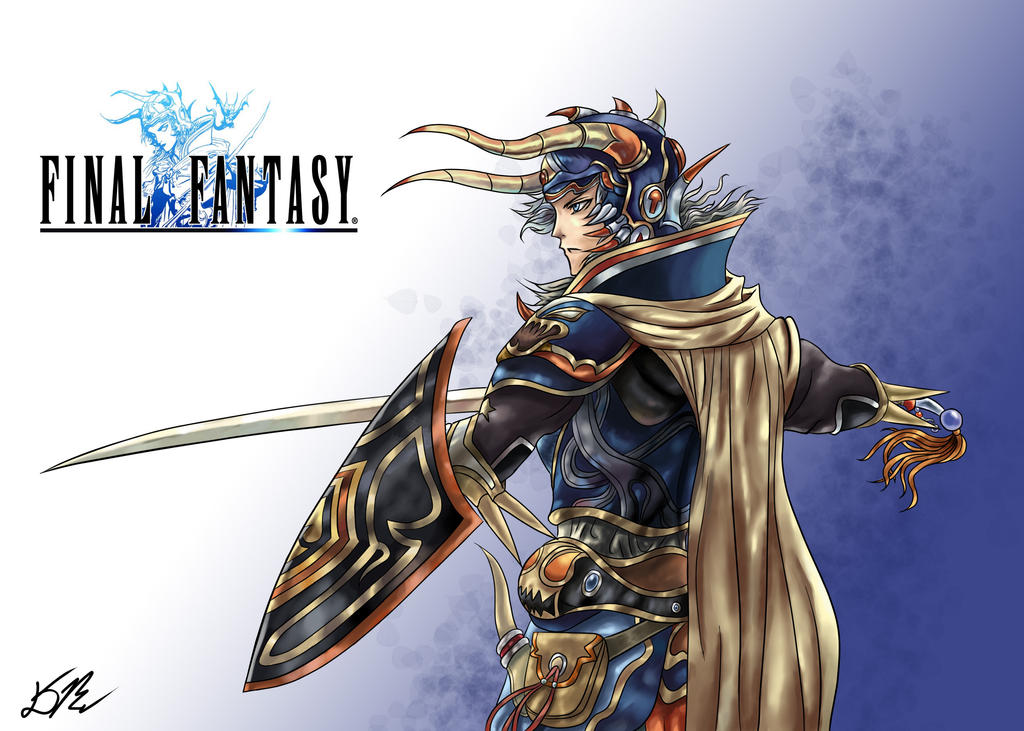
Warrior of Light by BaiHu27
Alright, after two posts examining proficiencies it's time to propose a solution.  A quick recap:
  1. Character Creation shouldn't determine the only weapons you wield in your career. 
  2. While the Fighter may share proficiencies he is still the best at wielding weapons.
  3. Not only can the Fighter wear heavy armor but he is still capable of quick movements

Taking that altogether here is the base Fighter Archetype I use in my games.

Monday, April 23, 2012

A to Z Challenge: T is for Thrusting (Damage Types)

Although work is conspiring to soak up all my available time I still have a few waking minutes left to get out a post.  I never would have expected the A-Z Challenge would have run me this ragged.

So without further adieu and much brevity attended I'll be fnishing up the damage types series.  Starting with Impact Weapon and Saturday's Slashing Damage.  I'll be skipping the introduction this time as it is much better laid out in Impact Weapons so here's the meat of the rules.

If any Wounds are dealt with a Thrusting weapon, the target takes additional Wounds each round equal to the weapons Thrusting Rating until they bleed out or the wound is stymied.

This is the current version.  It matches the form of the previous two, in that the effect is dependant on the weapons rating in Impact, Thrusting or Slashing.  However, one thing that bugs me is that through playtesting it was found that the easiest way to do Wound loss is to simply cap it at 1 Wound lost each round.  It's easy to remember, doesn't require you to look up or anything, least of all the thrusting rating of various weapons.  So here's the proposed redesign.

If any Wounds are dealt with a Thrusting weapon the target takes an additional Wound each round on their turn until they either bleed out or the wound is stymied.  Additionally, each time the weapon deals Wounds to a target (including bleeding damage in later turns) they lose HP equal to the weapon's Thrusting rating.

This removes some of the bite and makes the weapon less lethal, which is a good things since bad guys wield spears too.  It also means that a Thrusting weapon is the best weapon for attrition, while the impact weapon is the best for facing off vs armor and the slashing weapon is the best weapon for quickly cutting down foes, but mostly limited to lightly or unarmored folks.

There you have it!  Now if you'll excuse me I have a date with the crack of dawn.
Saturday, April 21, 2012

A to Z Challenge: S is for Slashing (Damage Types)

First post on Damage Types (Impact) is over here.

Continuing with damage types today I'm going to talk about slashing weapons.  A slashing weapon inflicts damage by moving the length of the blade in a cutting motion down the side of, well, whatever it is you're cutting. This can range from long gashes if you get the majority of the blade to cut to something as small as a little nick.  The actual cutting motion depends on the type of sword (curvature & weight distribution).  If you've spent enough time cutting onions you know there are plenty of ways to dice it and with different motions.  The same applies to heavier knives and swords.  The Khukuri for example is meant for a downward chopping motion followed by a cutting motion, a brute force weapon.  Compare this to the Scimitar, Shamshir or Talwar and you have a slender curved blade well made for slicing motions while on horseback as well as for quick slashes and flicks of the wrist while on foot.  While the methods of slashing may be different they all have one general outcome, to cause a lot of damage over a large surface area.  They also share the same weakness, they need to be able to cut through the surface.

A slashing weapon increases wounds dealt equal to its slashing rating on a critical hit or against lightly or unarmored targets.

Most light armor only cover the vitals (torso, possibly arm guards or shoulder guards) so for the most part a lot of skin is exposed, perfect for a razor sharp edge.  The critical hit clause is meant to represent when you have the perfectly aligned strike poised to hit their vitals and any seams or vulnerabilities in their armor.  So as we saw before, Impact weapons are very good at beating on armored foes, slashing weapons are quite adept at taking on lightly and unarmored foes.  Turning your average sword into a deadly weapon against the poorly equipped.

Tuesday, April 10, 2012

A to Z Challenge, I is for Impact (Damage Types)

Today I'm going to talk a bit about damage types, a tragically underutilized section of 3.X D&D and beyond.  If you're not familiar with damage types or with 3rd edition, there are typically three types that have remained constant over the years (and popped up occasionally in earlier editions like with the piercing immunities of your average menacing skeleton) which were Piercing, Slashing, and Bludgeoning.  All of which were pretty self-explanatory.  There was a lot of potential here, different weapons exist for a reason, primarily to impart their damage (force) in different methods.  Those methods adapted with the times, culture (fighting styles) and with the changes in armor.  There were a few occasions where damage type popped up, one of the Complete books allowed you to purchase Armor enhancements that gave you damage reduction vs a specific damage type and occasionally a monster might be resistant to all damages types but one.  The aforementioned skeleton would be resistant to all non-bludgeoning damage.  This was all mostly an afterthought though.  While D&D is well known for its abstract combat I can't help but feel damage types were an after thought.  So I've decided to do a little something with them without getting too gritty.